 Call us now:

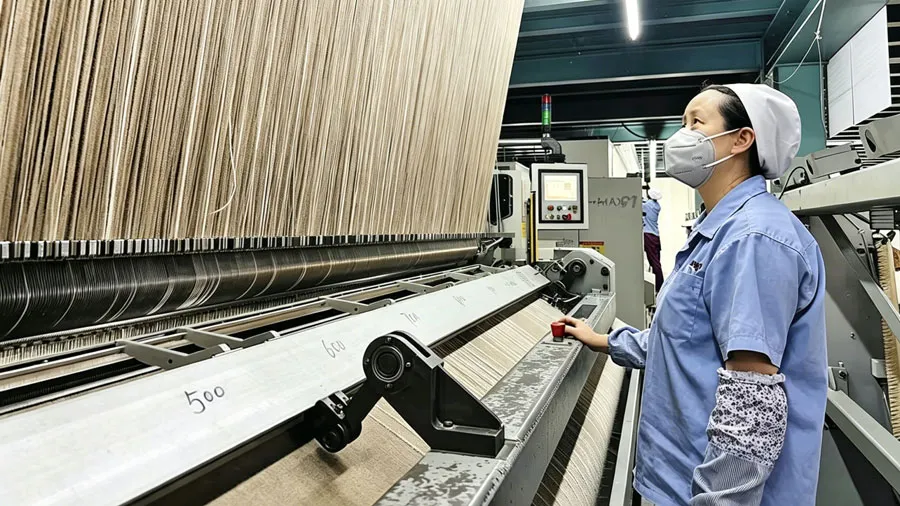
Rugs vs carpet isn’t a design question when you’re placing a container order. It’s a margin question. Buyers who compare only surface texture end up with late shipments, failed fire tests, or a quote that doubles after “final confirmation.” Fab Carpet runs its own tufting lines, dye house, and QC lab, so this guide answers the sourcing questions that actually decide your landed cost.
Rugs vs Carpet: Why the Comparison Changes at Scale
At retail volume, rug versus carpet is a style call. At 500+ square meters, it’s a construction and compliance call. Broadloom carpet uses continuous tufting across a fixed width, giving predictable per-meter cost once tooling is set. Rugs, particularly hand-tufted or hand-knotted pieces, price per unit and don’t scale the same way past a few thousand pieces. Carpet tiles sit in between: modular, replaceable panel by panel, and increasingly the default for office and retail contracts.
Who This Decision Actually Affects
- Importers stocking SKUs for wholesale distribution
- Private-label brands sourcing OEM/ODM production runs
- Design firms specifying flooring for hospitality or healthcare builds
- General contractors buying against a fixed project budget and fire-code requirement
Fiber & Yarn: The Variable That Determines Wear Life
Fiber choice, not surface appearance, predicts how a floor performs under five years of foot traffic.
Nylon 6 vs Nylon 6.6
Nylon 6.6 has a tighter molecular structure than Nylon 6, giving it better resilience recovery after crushing and stronger resistance to abrasive soil. Nylon 6 costs less and dyes more evenly in small custom-color batches, which matters for private-label runs under 2,000 meters. For airport terminals, hotel corridors, and other high-crush zones, Nylon 6.6 with a denier of 1,200-2,400 is the standard spec.
Polypropylene (Olefin)
Polypropylene resists moisture and staining well because the fiber itself doesn’t absorb liquid, but it has poor resilience recovery — it crushes and stays crushed under heavy furniture or rolling traffic. It suits budget-tier commercial projects with lighter foot traffic, not lobbies or corridors.
Wool and Wool Blends
Wool offers natural flame resistance and strong recovery from crushing, making it a fit for premium hospitality where both look and long-term performance matter. It costs more per kilogram than synthetic fiber and requires tighter dye-lot control during production.
📊 Technical Specification Table: Fiber Comparison
| Fiber Type | Denier Range | Abrasion Resistance (Martindale) | Best-Fit Zone |
|---|---|---|---|
| Nylon 6.6 | 1,200-2,400 | 40,000+ cycles | Lobbies, corridors, airports |
| Nylon 6 | 1,000-1,800 | 25,000-35,000 cycles | Retail, offices |
| Polypropylene | 900-1,500 | 15,000-20,000 cycles | Light-traffic commercial |
| Wool Blend | 5,000-8,000 (yarn count) | 30,000+ cycles | Premium hospitality |
Backing Systems and Construction: What Determines Real Lifespan
Fiber gets the attention, but backing determines whether a carpet survives a decade of use.
Action Bac, Unitary Bac, and PVC Cushion Backing
Action Bac uses a woven polypropylene primary backing bonded with latex — durable and standard for broadloom contract carpet. Unitary Bac fuses backing in a single layer, giving better dimensional stability for carpet tiles that need to lie flat without curling at the edges. PVC cushion backing adds impact absorption underfoot, common in healthcare corridors where sound and comfort both matter.
Tufting Gauge and Stitch Rate
Gauge measures the spacing between needle rows — a 1/10 gauge packs more yarn per inch than a 1/8 gauge, producing a denser, more durable face. Stitch rate, measured per 10 centimeters, tells you pile density lengthwise. Buyers should request both numbers on any spec sheet, not just “pile weight,” since two carpets with identical weight can wear very differently based on gauge and stitch rate.
Fire Rating: The Non-Negotiable Line Item
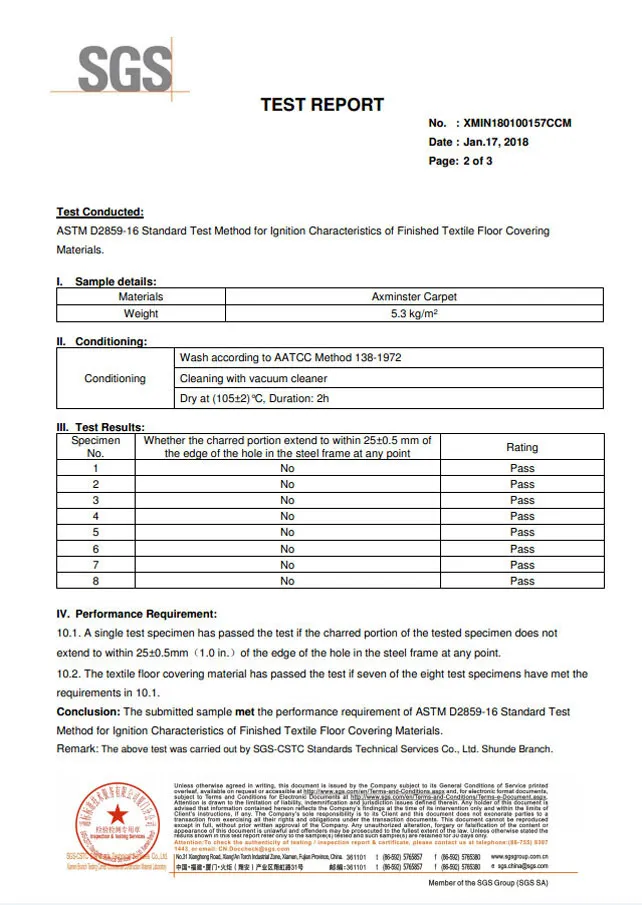
Fire compliance varies by destination market and building type. US commercial projects generally require ASTM E648 Class I performance. European projects reference EN 1307 pile carpet classification alongside EN 13501-1 reaction-to-fire ratings. UK contracts often specify BS 5852 for upholstered and soft flooring elements. Confirm the exact standard your project’s building code requires before production, not after the container ships.
ASTM fire testing standards for commercial flooring
Rugs vs Broadloom vs Carpet Tiles: Side-by-Side for Commercial Buyers
📊 Technical Specification Table: Format Comparison
| Format | Install Cost | Acoustic (NRC) | Expected Lifespan | Replacement |
|---|---|---|---|---|
| Area Rug | Low, no labor | 0.25-0.35 | 10-20 years (rotated use) | Full unit |
| Broadloom Carpet | Moderate to high | 0.30-0.45 | 8-12 years | Full room |
| Carpet Tile | Moderate | 0.30-0.40 | 10-15 years | Panel by panel |
Carpet tiles hold an advantage most C2C flooring guides skip entirely: damaged tiles get swapped individually, so a stained or worn section near a doorway doesn’t force a full-room replacement. For open-plan offices and retail, that alone changes total cost of ownership over ten years.
What Actually Sets Your FOB Price
Quotes vary widely between suppliers because raw material and process costs move independently of each other.
Raw Material Volatility
Nylon chip pricing tracks crude oil and caprolactam markets, so a quote locked in January can shift by the time a large order confirms production in Q2. Wool pricing follows seasonal auction cycles out of major sourcing regions. Buyers negotiating six-month framework agreements should ask suppliers for a raw-material price adjustment clause rather than a fixed rate with no ceiling.
Incoterms That Change Your Landed Cost
FOB puts export customs clearance and loading on the factory, with the buyer covering freight and import duty. CIF includes freight and insurance in the factory’s quote — convenient, but often marked up above what a buyer’s own freight forwarder would charge. DDP shifts import duty and delivery to the factory, useful for first-time importers unfamiliar with a destination market’s customs process.
The Line Items Buyers Forget to Ask About
- Custom colorway lab-dip approval fees
- Small-batch dyeing surcharges below minimum dye-lot volume
- Tooling costs for custom pattern or border development
⚠️ 2026 Sourcing Note: Raw material costs for synthetic fiber have shown quarterly volatility tied to petrochemical supply. Lock pricing windows in writing, and confirm whether your quote is fixed for 30, 60, or 90 days.
Sourcing Custom Flooring: From Inquiry to Container
Sourcing Flowchart
Phase 01
1. Inquiry & Consulting
Submit your detailed project specifications, destination market standards, and target budget window.
Phase 02
2. Free Swatch Request
Fast-track shipping of our existing texture, pile density, and standard color swatches for quality feel.
Phase 03
3. Spec Confirmation
Lock down structural metrics including exact Denier, Gauge, Stitch Rate, and Backing system architecture.
Phase 04
4. Pre-Production Sample
Custom Pantone color-matching or custom designs manufactured. Sample fee 100% credited back on bulk order.
Phase 05
5. Deposit & Scheduling
Upon sample physical sign-off, deposit secures raw yarn allocations and schedules your order into our tufting queue.
Phase 06
6. Production & In-line QC
Tufting, pile shearing, and backing execution with persistent monitoring inside Fab Carpet’s internal QC lab.
Phase 07
7. Pre-Shipment Inspection
Final confirmation against the signed sample. Fully supports third-party verification including SGS or Bureau Veritas.
Phase 08
8. Container Loading
Precision packing layout optimization for rolls or pallets, dispatched via agreed Incoterms (FOB, CIF, or DDP).
MOQ by Construction Type
Tufted carpet typically runs a lower MOQ than woven or hand-knotted product, since tufting doesn’t require loom setup time per design. Buyers requesting a custom colorway on tufted broadloom should expect MOQs starting in the low hundreds of square meters; hand-knotted rugs generally require higher per-design volume to offset labor setup.
Lead Time Reality
Design approval typically takes 3-5 business days once a lab dip is confirmed. Bulk production runs 20-35 days depending on order size and fiber type. Add pre-shipment QC and transit time on top — buyers working to a hard project deadline should confirm total lead time in writing before deposit, not estimate it from a general sample answer.
OEM & Private Label: What Brand Owners Need Before Signing
Private label buyers own the brand and packaging while the factory manufactures to spec; white label buyers select from an existing catalog with light customization. Brands building a distinct product line should confirm Pantone-matched lab dip approval before bulk dyeing, since screen colors and physical dye lots rarely match without a physical reference.
Import compliance adds another layer: REACH restricts specific chemical substances in flooring sold into the EU, California’s Prop 65 requires disclosure on certain materials sold in the US, and CARB Phase 2 governs formaldehyde emissions from composite wood components sometimes used in rug backing. Confirm which of these apply to your destination market before finalizing packaging artwork.
REACH regulation requirements for textile flooring imports
explore custom OEM and private label carpet programs
Application-Specific Recommendations
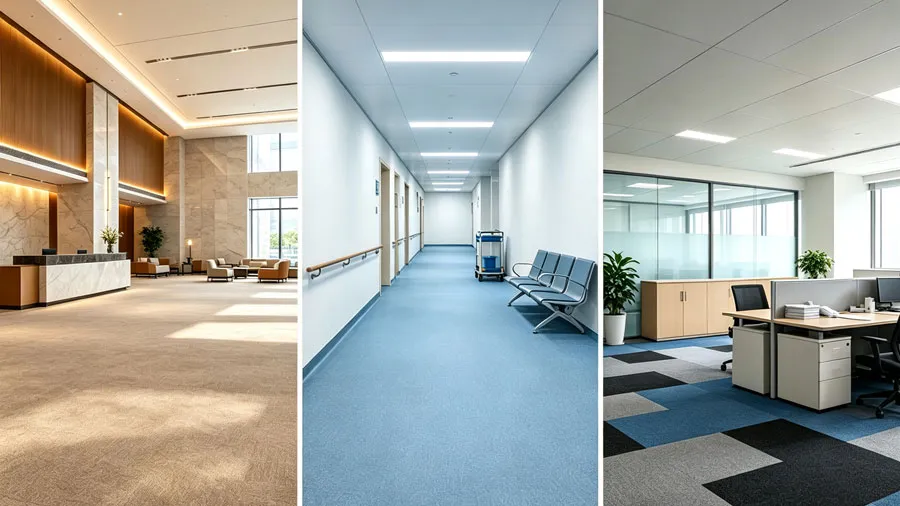
| Project Type | Recommended Fiber | Backing | Fire Standard | MOQ Guidance |
|---|---|---|---|---|
| Hotel Lobby | Nylon 6.6 or Wool | Action Bac | ASTM E648 Class I | 300+ sqm |
| Healthcare | Nylon 6.6, antimicrobial finish | PVC Cushion | EN 13501-1 | 200+ sqm |
| Office/Retail | Nylon 6 | Unitary Bac (tile) | ASTM E648 | 150+ sqm |
Quality Control: What Separates a Factory from a Trading Company
Fab Carpet inspects incoming yarn for tensile strength and dye-lot consistency before production starts, runs in-line checks on pile height tolerance and density during tufting, and conducts pre-shipment inspection against the original approved sample. Third-party verification reports from SGS or Bureau Veritas are available on request for buyers who require independent confirmation before payment release.
Frequently Asked Questions
How is carpet abrasion resistance actually tested?
Martindale testing rubs a sample under controlled pressure for a set number of cycles, then measures fiber loss and appearance change. 40,000+ cycles indicates commercial-grade durability.
What’s the MOQ for a custom color on tufted carpet?
Typically starting around 300-500 square meters per colorway, depending on dye-lot minimums at the factory.
How long does sample approval take before bulk production starts?
Pre-production samples are paid upfront to match your exact specifications (takes 7-10 business days to produce and ship). The sample cost will be fully deducted from your final bulk order amount.
Which fire standard applies to my project?
It depends on destination country and building type — confirm with your local building code office, then request matching certification from your supplier before production.
Can a factory provide private label packaging?
Yes, when volume meets minimum packaging-tooling requirements — confirm artwork specs and compliance labeling (REACH, Prop 65) before finalizing.
What’s the real cost difference between broadloom and carpet tile for a large office?
Tile costs slightly more per square meter upfront but reduces long-term replacement cost since damaged panels swap individually instead of requiring full-room reinstallation.
The Bottom Line for Buyers
Rugs vs carpet stops being a style question the moment you’re sourcing at volume — it becomes a question of fiber grade, backing construction, fire compliance, and lead time you can actually put in a contract. Buyers who ask for denier, gauge, and stitch rate get accurate quotes; buyers who ask about “quality” get marketing language back.
browse carpet tile and broadloom product categories
Request a free sample or get a bulk quote directly from Fab Carpet’s production team — no trading company markup, no guessing on lead time.